


🔥 The Confederacy's Shadow: How Caste Thinking, Cheap‑Labor Politics, and Forgotten Alliances Still Haunt Black America

May 16, 2026
Politics & History
🗞️ ECHO NEWS TV LLC
📜 I. The Ghosts We Pretend Not to See
Monmouth County, NJ - Every nation has its ghosts. America’s ghosts are unusually persistent — they linger in labor markets, immigration policies, voting blocs, and the quiet decisions of corporate boardrooms. They whisper through the cracks of history textbooks and the silences of political speeches.
For Black Americans, these ghosts are not metaphorical. They are structural. They are economic. They are daily. They are the feeling of being pushed aside in one’s own country — not only by the descendants of the Confederacy, but by modern systems that inherited Confederate logic without ever admitting it.
To understand how we arrived here, one must look not only south of the Mason‑Dixon line, but south of the U.S. border — to a chapter of history that America has never fully confronted.
🏛️ II. Spain’s Caste Blueprint: The Oldest Architecture of Inequality
Long before the Confederacy existed, the Spanish Empire engineered a racial hierarchy so rigid it could be diagrammed like a bureaucratic flowchart. The casta system ranked human beings with mathematical precision:
Spaniards
Criollos
Mestizos
Indigenous peoples
Africans and Afro‑descendants
This was not a cultural preference. It was law. It was church doctrine. It was the operating system of colonial life.
The Spanish Inquisition’s obsession with limpieza de sangre — “purity of blood” — created a worldview in which European ancestry equaled legitimacy, and darker ancestry equaled servitude. Over centuries, this logic seeped into cultural norms, shaping how entire societies understood power, identity, and belonging.
This is not a stereotype. This is documented world history — and its echoes still reverberate.
🚚 III. The Confederates Who Fled South — and Found Familiar Ground
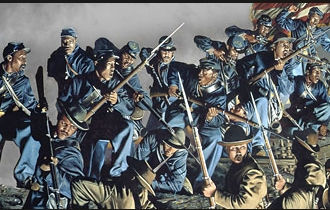
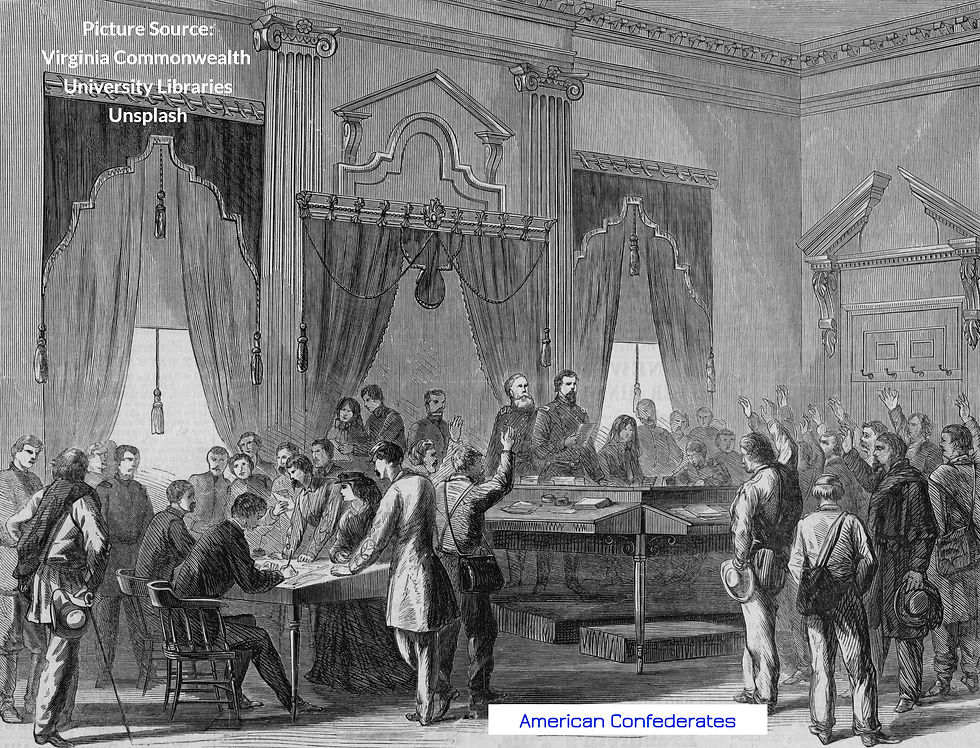
When the Confederacy collapsed in 1865, thousands of defeated soldiers, officers, and families refused to accept the new racial order being imposed upon them. They gathered their children, packed their wagons, and crossed into Mexico.
Emperor Maximilian, I welcomed them. He saw in these exiles a chance to modernize agriculture and strengthen his fragile empire.
The Confederates saw something else: a place where their worldview could survive.
Some attempted to recreate plantation colonies. Others forged alliances with Mexican landowners who had long benefited from caste‑based labor systems.
For a brief moment, two worlds — one shaped by the Confederacy, the other by Spanish colonialism — recognized each other.
It was not a partnership of nations. It was a partnership of ideologies. Hispanics in the American Civil War - Alchetron, the free social encyclopedia
⚙️ IV. The American Pattern: Replace Black Labor, Preserve the Old Order
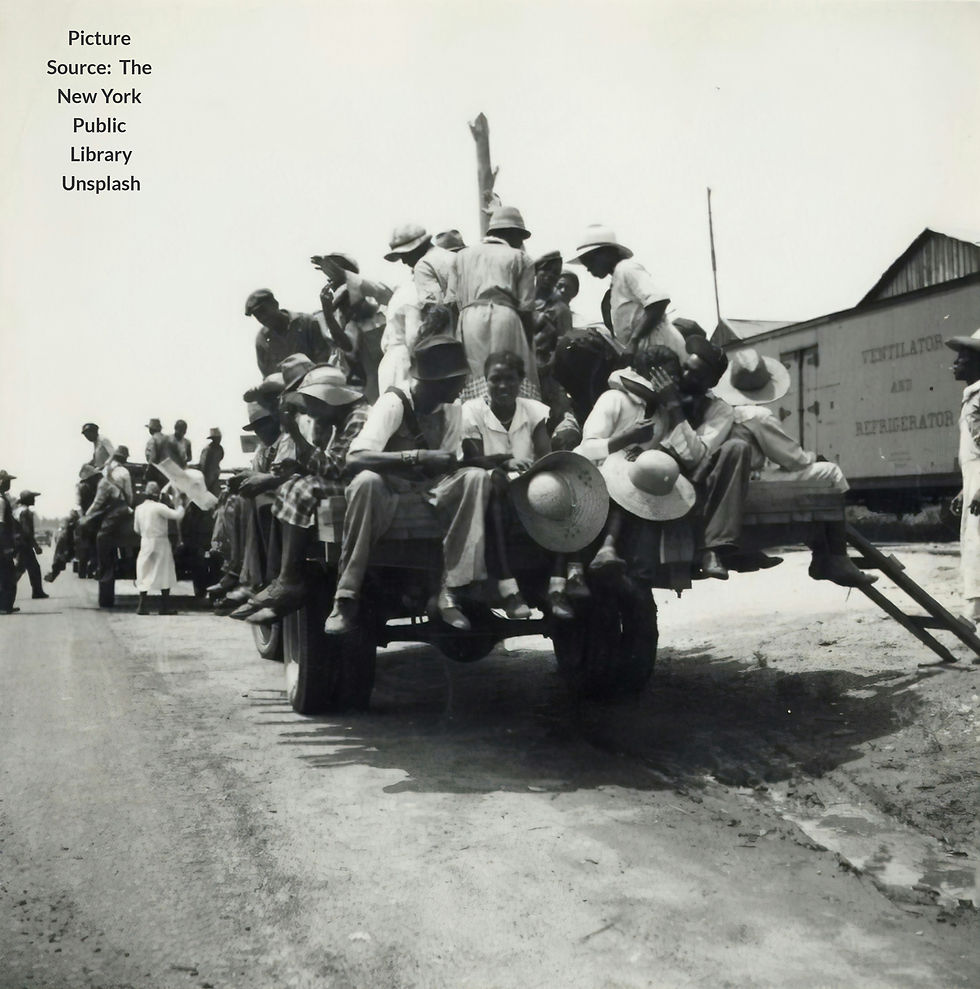
From the 1890s onward, whenever Black American workers demanded dignity — in the fields, in factories, in mines, in auto plants — the response was chillingly consistent:
Replace them.
Replace them with anyone who would work for less. Replace them with anyone who lacked citizenship protections. Replace them with anyone who could be threatened, silenced, or deported.
This was not an indictment of the workers themselves. It was a strategy crafted by:
Corporations
State governments
Federal agencies
Political coalitions
The goal was simple: Break Black labor power.
Michael Moore’s Roger & Me captured the tail end of this story — the collapse of Detroit, the outsourcing of jobs, the devastation of Black American families who had built the industrial North with their hands.
But the pattern began long before the cameras rolled.
⛪ V. The Sanctuary Movement and the Christian Coalition: An Unspoken Alliance
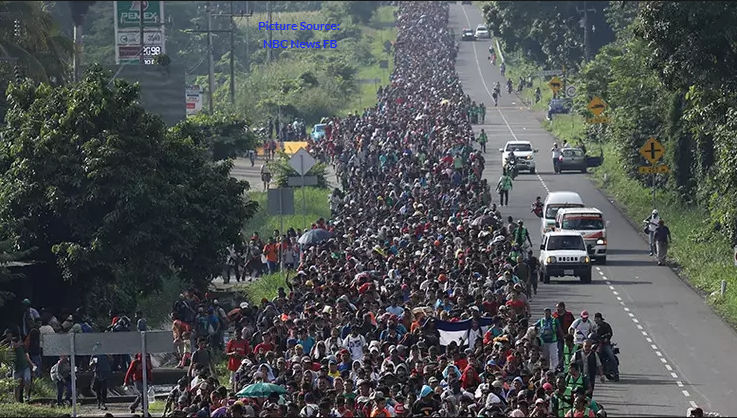
By the 1980s, the Christian Coalition — a political force built on the remnants of the old Southern order — had become the beating heart of the Republican Party. At the same time, the Sanctuary Movement emerged, originally framed as a humanitarian effort to protect migrants fleeing violence.
But politics is rarely pure.
Over time, the Sanctuary Movement became entangled with:
Corporate labor needs
Anti‑union interests
Religious networks
Demographic strategy
Segments of the Republican Party supported large‑scale labor importation while simultaneously opposing civil rights enforcement for Black Americans.
The contradiction was never resolved. It was simply hidden beneath patriotic rhetoric and moral posturing.
🗳️ VI. The Modern Collision: Voting Blocs, Caste Logic, and the New Political Map

In recent elections, a significant portion of Hispanic voters — particularly those influenced by conservative religious networks — supported Donald Trump.
This is not because any ethnicity is inherently aligned with any ideology. That is false.
The explanation is structural:
Some communities inherited caste‑based worldviews from colonial history
Some were mobilized by conservative Christian networks aligned with the Republican Party
Some were integrated into labor systems historically shaped by Confederate‑style economics
Some were targeted by anti‑socialist messaging
Some were courted by political strategists seeking to counter Black voting power
These forces created a political coalition that often stands in tension with the goals of the Black American Civil Rights Movement.
This is not about individuals. It is about systems that reward certain worldviews and punish others.

⚖️ VII. The Cost: Black Americans Squeezed From Both Sides
Black Americans — the citizens who built the nation, fought its wars, paid its taxes, and led its moral revolutions — now find themselves squeezed between:
The lingering racism of unrepentant White Americans and
The structural preferences of systems that elevate imported labor over Black citizen labor
This is not the fault of migrants seeking survival. It is the fault of policies designed to replace Black labor whenever Black citizens demand fairness.
It is the fault of corporations that treat citizenship as an inconvenience. It is the fault of political coalitions that exploit demographic shifts to weaken Black political power. It is the fault of a nation that refuses to confront its own ghosts.

🔥 VIII. The Truth America Must Finally Face
The Confederacy did not die in 1865. It adapted.
It moved into boardrooms. It moved into policy think tanks. It moved into immigration strategy. It moved into religious networks. It moved into labor markets. It moved into the quiet corners of American life where caste thinking still finds fertile soil.
Black Americans are not imagining the pressure. They are living inside a system built to contain them.
And until the nation confronts the full, uncomfortable truth — the alliances, the caste logic, the labor strategies, the political marriages — the cycle will continue.
History is not past. It is policy.
And policy is the ghost that never stops whispering.


📚 References (Print Edition)
These are historical and academic sources that support the themes of the article. They are not political endorsements — they are factual references.
Smithsonian National Museum of African American History and Culture Exhibits on Reconstruction, labor history, and racial caste systems. https://nmaahc.si.edu
Library of Congress — “Confederate Colonies in Mexico” Archive Primary documents on Confederate exile communities after 1865. https://www.loc.gov
Stanford Encyclopedia of Philosophy — “Colonial Casta Systems” Academic overview of Spanish racial hierarchy and its long‑term effects. https://plato.stanford.edu


Comments