


REAL CHRISTIANITY AND THE BLACK AMERICAN SOUL: A LEGACY FROM REV. WILLIAM BRITTINGHAM AND MAJOR DR. MARTIN DELANY

May 14, 2026
By Echo News TV LLC – Social Justice & Faith Desk


New Jersey - There are moments in history when faith is not merely a belief system but a lifeline, a compass, and a call to action. For generations of Black Americans, real Christianity was never passive. It was never a spectator sport. It was a living, breathing covenant with the Most High God—one that empowered ordinary people to do extraordinary things.
This truth was taught to me by my grandfather, Rev. William Brittingham of Quinn Chapel A.M.E., located in Atlantic Highlands NJ, and by my father, William Delancy Brittingham IV, who carried the same sacred fire. Their teachings were not abstract theology. They were the distilled wisdom of ancestors who fought in the Civil War, who resisted bondage, who built churches, who raised families under the shadow of oppression, and who believed that faith without works is dead.

Among those ancestors stands Major Dr. Martin Delany, physician, abolitionist, Civil War officer, and co‑editor of Frederick Douglass’s North Star. His words still thunder across time:
“Our elevation must be the result of self‑efforts and work of our own hands. No other human power can accomplish it.”
This was the Christianity my grandfather lived and preached: a faith that moves, acts, intervenes, and protects.
The Throne of Grace and the Freedom to Choose

My grandfather taught that through the sacrifice of God’s only begotten Son, Jesus the Christ, believers gained the right to go boldly before the throne of God and cry, “Abba, Father.” This boldness was not arrogance. It was access—access that had once been denied to us as a people, both spiritually and socially.
God created all people as free moral agents. That means we are empowered to choose righteousness over wrongdoing, justice over silence, and truth over deception. Our ancestors understood this deeply. They knew that to walk with Christ was to walk in power, clarity, and responsibility.

Rev. William Brittingham II (or third) taught that the Holy Spirit equips believers to be:
Light in darkness
Truth when lies are spreading
Courage when fear is demanded
Justice when injustice becomes normalized
This is why enslaved Africans and displaced First Nation people embraced Christ—not as the religion of their oppressors, but as the liberating God who heard the cries of the captive.
Faith That Fights for the Vulnerable
True Christianity, as taught by our ancestors, was never passive in the face of evil. It confronted child abuse, exploitation, and the destruction of families. It resisted systems designed to break the human spirit. It empowered believers to stand boldly against injustice.
Major Delany warned us:

“The rights of no oppressed people have ever yet been obtained by a voluntary act of justice on the part of the oppressors.”
Our ancestors understood that God’s people are His hands, His feet, and His voice on earth. They believed that to follow Christ was to intervene, not retreat. To protect, not ignore. To act, not merely pray.
The Drift Toward Evangelical Passivity
But over the last forty years, many Black American Christians were slowly pulled away from this ancestral faith. Television evangelicalism—rooted in white nationalist theology—taught a passive Christianity that discouraged intervention, discouraged advocacy, and discouraged defending our own communities.
This doctrine told believers:
“Do not fight injustice.”
“Do not challenge systems harming your people.”
“Just pray and wait.”
This was never the faith of our ancestors. It was a distortion.
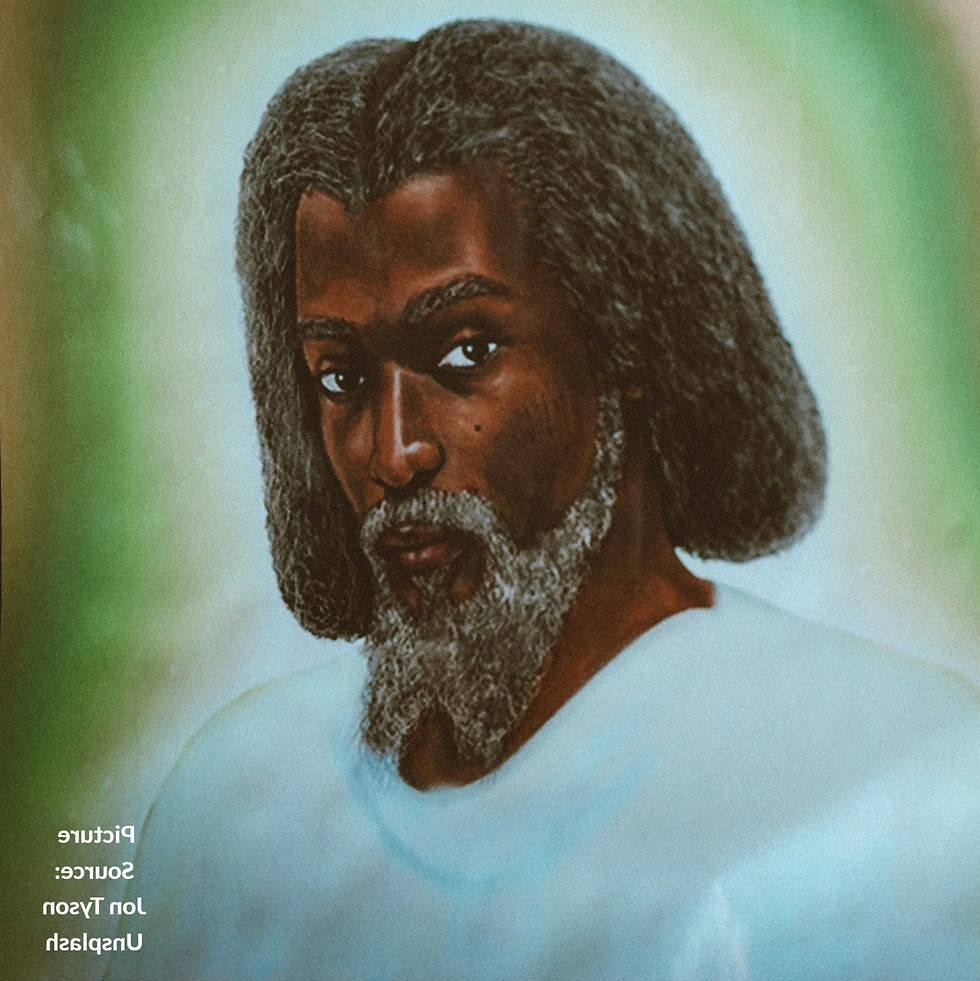
It replaced the biblical Christ—described in Scripture with wool-like hair and bronze skin—with a European image designed to pacify, not empower.
It encouraged silence while drugs were funneled into Black communities, while mass incarceration swallowed generations, while foster care systems trafficked vulnerable children, and while racist policies devastated families.
Delany foresaw this danger:

“A serpent is a serpent, and nonetheless a viper, because it is nestled in the bosom of an honest-hearted man.”
In other words: deception wrapped in religious language is still deception.
The Cost of Forgetting Our Spiritual Lineage
When Black Christians abandoned the active, justice-centered faith of their ancestors, they unknowingly surrendered their spiritual inheritance. They forfeited the boldness that once fueled abolitionists, educators, soldiers, and civil rights warriors.

Delany reminded us:
“Every people should be the originators of their own destiny, the projectors of their own schemes, and creators of the events that lead to their destiny.”
Our ancestors lived this truth. They built schools, churches, businesses, and movements. They fought for civil rights not only through protest but through prayer, strategy, and sacrifice.
They believed that faith is proven by action.
A Call Back to Real Christianity
Today, as many Black Americans feel defeated by the erosion of civil rights, the rise of racial hostility, and the ongoing assault on our children and communities, we must return to the Christianity of our ancestors.
A Christianity that:
Confronts injustice
Protects the vulnerable
Speaks truth with boldness
Honors the image of God in every human being
Recognizes that believers are God’s instruments on earth
Delany said:
“We must make an issue, create an event, and establish a national position for ourselves.”
This is not merely historical commentary. It is a prophetic mandate.
Joy in the Journey, Strength in the Struggle

Even in struggle, our ancestors found joy. They believed that Christ came so that we might have life, and have it more abundantly. They believed that we are sojourners on a spiritual pathway that leads to freedom—freedom of the soul, freedom of the mind, and freedom of the body.
Real Christianity is not defeat. It is not despair. It is not silence.
It is courage, clarity, community, and commitment.
It is the faith that carried our ancestors through slavery, Reconstruction, Jim Crow, the Civil Rights Movement, and every battle since.
It is the faith that still carries us now.
And it is the faith we must reclaim.


Comments