


A Baby’s Life for a Box of Diapers: How America’s Racialized Policing Machinery Killed Kohen Kartier Wiley

PRESS RELEASE
FOR IMMEDIATE RELEASE
Echo News TV LLC
June 22, 2026
Middletown, NJ — Intro: A Nation in Mourning
Echo News TV LLC extends its deepest condolences to the family of 1‑year‑old Kohen Kartier Wiley, whose life was taken by a Senatobia, Mississippi, police officer responding to a false shoplifting accusation at a Walmart store. This tragedy has shaken communities across the nation and reignited urgent calls for systemic reform in American policing.


According to reporting by Sarah Hooper (MSN, June 17), officers opened fire on a vehicle containing two Black women and baby Kohen after claiming the driver “drove in their direction.” Witnesses, however, described the women carrying a box of diapers and baby Kohen as they left the store. No stolen items were found in the vehicle. The Mississippi Bureau of Investigation confirmed that officers were aware a child was present before shots were fired. One-year-old boy shot dead by police responding to shoplifting
“This is not a policing failure — it is a moral failure,” said an Echo News TV LLC reporter. “A baby was killed over an accusation that turned out to be false. This level of escalation reflects a deeper, historically rooted crisis in American law enforcement.”
Historical and Structural Context: A System Built on Racial Control
Echo News TV LLC emphasizes that Kohen’s death cannot be understood in isolation. Modern policing in the United States evolved from systems designed to control Black men's and women's bodies during and after slavery. In the Reconstruction era, states used policing to criminalize everyday circumstances among Black people — including vagrancy, unemployment, and mobility — to maintain a racial caste system and funnel Black citizens into forced labor.
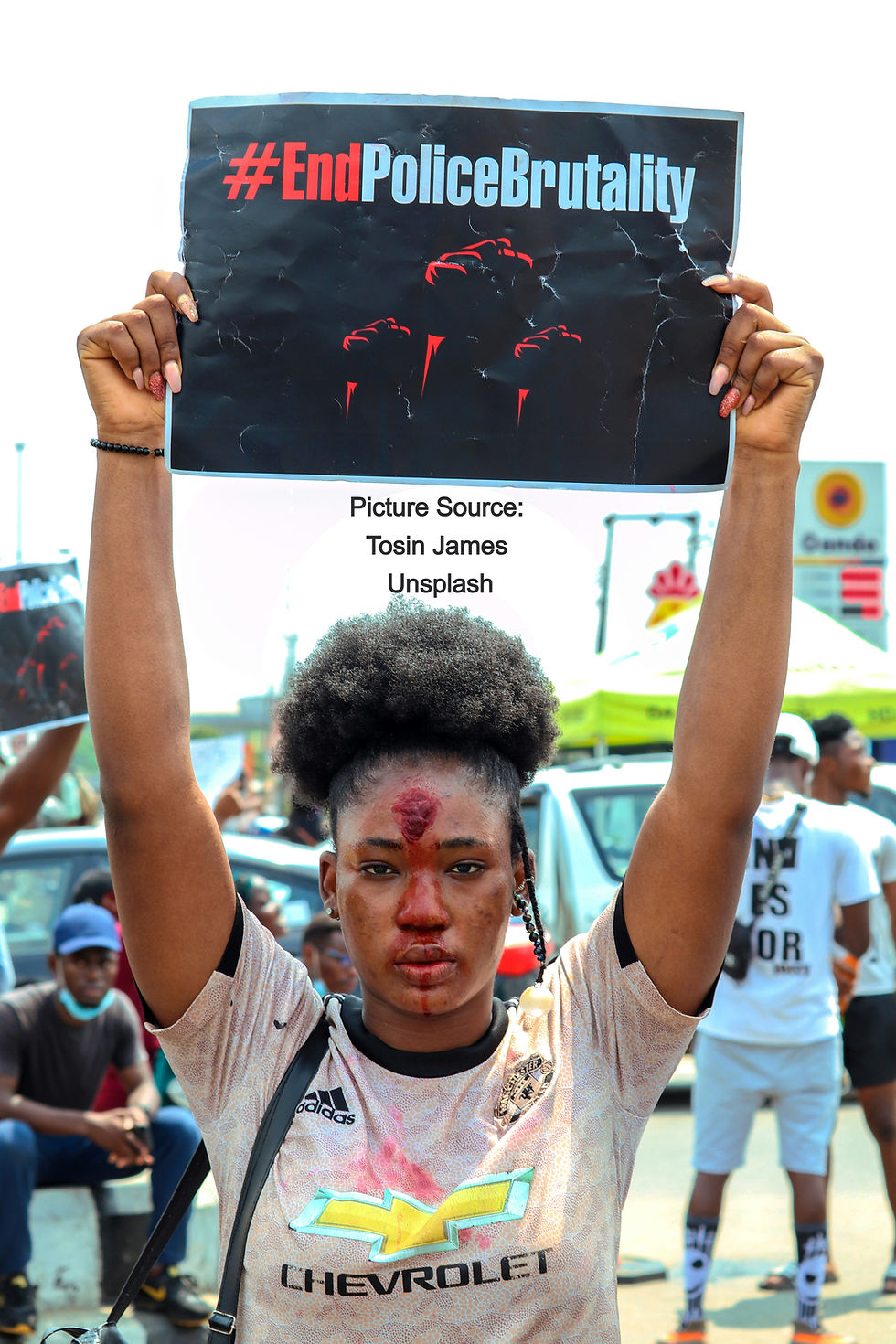
This history normalized:
The criminalization of Black life
The perception of Black citizens as inherently suspicious
The use of police violence as a tool of social control
These patterns continue to shape policing today.
Proactive Policing and Racial Disparities
Aggressive policing strategies — including proactive policing, stop‑and‑frisk, and predictive policing — disproportionately target Black citizens and Latinx communities.
Research shows:
Terry stops (stop‑and‑frisk) allow officers to detain civilians based on vague “reasonable suspicion,” often resulting in unconstitutional searches.
Between 2002 and 2014, 5 million New Yorkers were stopped; 82–90% had committed no offense.
Black residents are more likely to be pushed, handcuffed, pepper‑sprayed, or held at gunpoint during these encounters.
Predictive policing algorithms replicate historical bias, sending more officers into Black neighborhoods and escalating unnecessary confrontations.
These practices have been linked to:
Increased exposure to police violence
Psychological trauma
Diminished trust in public institutions
Adverse health outcomes for Black citizens and Latinx residents
Echo News TV LLC asserts that these policies create the conditions under which tragedies like Kohen’s death become possible.

Psychological Factors: Training That Escalates Rather Than Protects
Modern police training often conditions officers to:
Over‑perceive threat
Under‑perceive humanity
Default to force rather than judgment
Studies also show that police officers experience higher rates of domestic violence, reflecting the emotional desensitization and aggression reinforced through militarized training environments.
“These psychological patterns matter,” said the Echo News TV LLC investigative journalist. “They reveal a profession shaped by hypervigilance, racialized threat perception, and a culture that rewards domination over discernment.”
A Call for Immediate National Action
Echo News TV LLC urges lawmakers, police departments, and community leaders to implement the following reforms:
Ban firing into moving vehicles, except under narrowly defined, evidence‑based circumstances.
Mandate psychological evaluations following high‑adrenaline incidents.
Replace militarized training with de‑escalation practices grounded in behavioral science.
End stop‑and‑frisk and predictive policing programs that disproportionately target communities of color.
Ensure independent investigations of all police shootings involving children.
Increase transparency in police reporting and disciplinary actions.
Echo News TV LLC Stands with Kohen’s Family
Kohen Kartier Wiley should be alive today. His death is a devastating reminder of the urgent need to dismantle the historical, structural, and psychological forces that continue to endanger Black North American families.
Echo News TV LLC stands with Kohen’s family, with Black mothers across the nation, and with every community demanding justice, accountability, and meaningful reform.
Justice for Kohen is justice for us all.


References:
1. On Stop‑and‑Frisk, Racial Disparities, and Psychological Harm
Geller, A., Fagan, J., Tyler, T., & Link, B. G. (2014). Aggressive policing and the mental health of young urban men. American Journal of Public Health, 104(12), 2321–2327.
2. On Racialized Use‑of‑Force and Structural Bias in Policing
Motley, R., & Joe, S. (2018). Police use of force by ethnicity, sex, and age: A systematic review of the literature. Journal of Ethnicity in Criminal Justice, 16(4), 289–322. https://doi.org/10.1080/15377938.2018.1508681 (doi.org in Bing)
3. On Historical Roots of Policing and Racial Control
Alexander, M., & West, C. (2012). The new Jim Crow: Mass incarceration in the age of colorblindness. The New Press.
Topic: Predictive Policing
RAND Corporation — Foundational Analysis of Predictive Policing
Perry, W. L., McInnis, B., Price, C. C., Smith, S. C., & Hollywood, J. S. (2013). Predictive policing: The role of crime forecasting in law enforcement operations. RAND Corporation. https://www.rand.org/pubs/research_reports/RR233.html (rand.org in Bing)
Lum, K., & Isaac, W. (2016). To predict and serve? MIT Technology Review, 119(1), 86–96. https://www.technologyreview.com/2016/01/07/162428/to-predict-and-serve/ (technologyreview.com in Bing)
Ferguson, A. G. (2017). Policing predictive policing. Washington University Law Review, 94(5), 1109–1189. https://openscholarship.wustl.edu/law_lawreview/vol94/iss5/6/ (openscholarship.wustl.edu in Bing)
Media Contact: Echo News TV LLC - Editorial Office - Middletown, New Jersey
Contact us!


Comments