


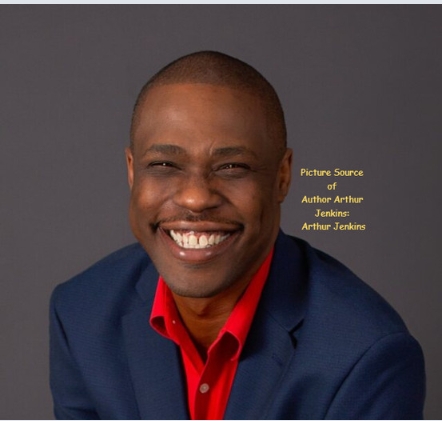
Why Not an HBCU? A Reflection on Black Excellence, Heritage, and Belonging by Arthur L. Jenkins, Author & Therapist
November 10, 2026
Home - Wilberforce University - Lincoln University Home - Benedict College | Columbia, South Carolina
🥁Echo News TV LLC: African American Affairs - Human Interest 🎺

Middletown, NJ - We all remember the iconic '90s television show A Different World, especially now with its 2026 reboot. The show resonated deeply with Black audiences and made many of us want to attend a Historically Black College or University (HBCU), even though these institutions have existed for well over a century. It was almost like discovering something the mainstream didn't want us to know.
When we consider higher education, we often hear about the romanticism and prestige surrounding Harvard, Princeton, or the University of Pennsylvania. But we rarely hear about the rich heritage of Howard, Grambling State, or Cheyney University. When we hear about Division I sports, we seldom see the athleticism and talent of HBCU athletes celebrated on the same scale. We don't hear enough about the doctors, lawyers, educators, and countless other professionals who have achieved excellence through these institutions.
But they are here, and they are proud.
When we attend predominantly White institutions (PWIs), we can make ourselves vulnerable to minority stress, isolation, racism, and discrimination. I experienced this firsthand while taking Criminal Justice courses at the predominantly White university I attended. I encountered both implicit and explicit biases from White students in my classes.
During one discussion, we were asked whether judges demonstrate greater prejudice against Black defendants in court or during trial proceedings. A White male student actually responded, "Well, we take care of our own." His statement sparked a heated exchange on the discussion board.
It was a sobering reminder that, even in 2025, some attitudes toward Black people remain deeply rooted in prejudice. It revealed just how far we still have to go. Last year, I had the pleasure of visiting Washington, D.C., and touring Howard University's campus. It was commencement season, and The Yard was filled with rows of white folding chairs in preparation for graduation day. Throughout the campus, smaller graduate, doctoral, and individual recognition ceremonies were also taking place.
I vividly remember walking along a campus path with our tour guide, my cohort following closely behind, when I witnessed something extraordinary. A multitude of Black men and women began filing out of Burr Gymnasium, fully cloaked in heavy, regal academic gowns adorned with velvet stripes along their sleeves. Each wore a distinctive velvet academic cap with a tassel hanging from it.
I soon realized that I was witnessing doctoral graduates—all Black, and surprisingly young.
I was elated, inspired, and deeply moved to see Black excellence on such magnificent display. There was something profoundly affirming about witnessing so many accomplished Black scholars gathered in one place, celebrating the highest levels of academic achievement.
We continued walking through the halls and into the imposing, historic buildings of Howard, absorbing the university's rich history and reveling in the experience. As I explored the campus, I found myself wishing that I had attended an HBCU instead of the private, predominantly White university where I earned my education.
I was almost envious of those who had the privilege of attending such a prestigious university, an institution founded to provide educational opportunities for Black people. Two of my professors were Howard graduates, and they wanted us to experience the heritage and institutional pride that had helped shape their professional lives. We were immensely grateful for the opportunity.
I was equally amazed by Howard's expansive institutional network. There was the university's major bookstore, operated by Barnes & Noble; Howard University Hospital (HUH), a teaching hospital; and its renowned radio station, WHUR-FM (96.3 MHz), known as the birthplace of the legendary late-night radio format, The Quiet Storm.

"This is Black?" I remember thinking to myself.
🎺🖤💛❤️💙🏛️
The realization that Black people could build and sustain an institution of this magnitude had never fully crossed my mind until I witnessed it firsthand. I hadn't realized that we had achieved such institutional prominence and influence. I was wrong.
But it isn't just Howard, although Howard is often regarded as one of the flagship institutions among HBCUs. Throughout the country, particularly in the South, there are numerous thriving HBCUs with deeply rooted educational traditions, professional networks, and communities dedicated to Black achievement.
This concentration of institutions is something we don't experience to the same extent in the northern, western, and northeastern regions of the country. Consequently, many Black students in these areas attend predominantly White institutions. Some of us are simply unaware of the opportunities available at HBCUs or never make the connection that there are institutions specifically founded to provide us with a place to learn, grow, and belong.
One of the greatest jewels of any HBCU is its social life, the lifelong personal and professional connections students establish, and the opportunity to join organizations deeply rooted in Black history and culture.
We cannot speak about Howard or HBCUs without acknowledging the Divine Nine.
These historically Black fraternities and sororities foster brotherhood, sisterhood, leadership, and lifelong professional networks among Black individuals. Their contributions extend far beyond campus life. These organizations serve disenfranchised communities, advocate for social causes, provide scholarships, mentor young people, and support initiatives that uplift marginalized populations.
And, of course, we cannot forget the social gatherings, the traditions, and the painted trees throughout The Yard and The Valley at Howard, proudly showcasing Greek life and the vibrant culture that makes the HBCU experience so distinctive. These traditions are more than social activities. They represent heritage, identity, community, and a sense of belonging that often extends across generations.
This article is a cautionary letter—and an invitation—to every Black high school graduate considering college or university. If possible and financially affordable, please consider an HBCU. The education, relationships, cultural heritage, and sense of community you will become part of can be irreplaceable. The experience of attending an HBCU is distinctive, rooted in generations of resilience, scholarship, and achievement.
It offers an opportunity not only to earn a degree but also to become part of a legacy much greater than yourself. To belong to such greatness is a testament to our collective accomplishments. It means joining a community that celebrates Black excellence, honors our history, and prepares future generations to continue building upon that legacy.
So, when the time comes to make one of the most important educational decisions of your life, remember that your options extend far beyond the institutions we have traditionally been taught to admire.
Google Howard University. Explore Grambling State, Cheyney, and the many other HBCUs across this country. Discover their histories, their graduates, their traditions, and the opportunities they offer.
And then ask yourself one simple question: Why not an HBCU?

You Know!
By Arthur L. Jenkins
Beneath the crimson skies of the south, it rose,
where magnolia dreams were nurtured, sweet smelling to the nose.
Brick by brick and frame by frame,
they built a future that only one could name.
Indigo blue, red and white – a proud claim,
Symbols of honor, grace and fame.
Loyalty, wisdom, intellectual pursuit – stages success.
Purity, truth, pursuit of knowledge, beats out the rest.
The Bison roars loud, defeating all that try,
They raise Old Glory’s excellence, don’t ask why.
Chanting the mantra proudly: You Know!
The struggles for the goal, through highs and lows.
Not just in books, but a stature of life,
In the Valley, the Greeks sound the fife.
For justice, community and what is right,
They stayed the course through the night.
The Mecca for all things Black, sits on its ivory throne.
The Kings march on, deserving of all they own.
Queens sit regal, facing adversity unbowed.
Redefining women’s roles, proud and loud.
The joy and tears – the sacred grounds,
Marked by heritage and hopes that abound.
In the quads they roam the halls and sleep tight,
With strength in tradition, showing their might.
For all who know, Black distinction comes in droves.
This HBCU does not stay in alcoves.
Crowned in legacy – bold and true,
Forever Brown and Black – old and new.
About Arthur
Arthur L. Jenkins is an author, therapist, multidisciplinary artist, and Echo News TV LLC freelance reporter whose work explores Black American identity, mental health, education, culture, and community advancement through thoughtful storytelling and public scholarship. Through his writing, advocacy, and creative works, including The Prince of Brown, Jenkins amplifies diverse Black American perspectives while promoting cultural pride, visibility, resilience, and informed dialogue across generations. The Prince of Brown: A Fictional Memoir, (Paperback) - Walmart.com


References:
Student Belonging and Community at HBCUs APA Citation
Sera, H., Hunter, M., Alvarado, A., & Brown, K. (2025). Prescribed, ritualized, and activated belonging: A qualitative study of student belonging at a historically Black college and university. Journal of Diversity in Higher Education, 18(6), 957-971. https://doi.org/10.1037/dhe0000631
HBCUs, Mental Well-Being, and Student Flourishing
HBCUs, Mental Well-Being, and Student Flourishing APA Citation
Patterson, A., Healthy Minds Network, United Negro College Fund Institute for Capacity Building, & The Steve Fund. (2025). Community, culture, and care: A cross-institutional analysis of mental health among HBCU and PBI students. University of Michigan School of Public Health.


Comments