


Spotlight Report: William Elijah Rock – A Trailblazer in Black Journalism & Community Empowerment-Revised Jan 29th

Updated: Jan 29
January 26, 2026
Echo News TV LLC Spotlight
*****************************Revised with audio reader link January 29, 2026: ********************************

Pine Brook, NJ (also known as Tinton Falls) – Few legacies in American journalism are as profound as that of Mr. William Elijah Rock. Born on January 22, 1861, in Pine Brook, New Jersey, to Peter Rock and Emma America Schenck Rock, his life stands as a radiant testament to hope, resilience, and progress. His lineage is nothing short of extraordinary: the ancestral grandson of Abraham Rock, an enslaved fine thoroughbred horse breeding and trainer abducted from Africa, and Ruth Rock, a full-blooded Lenni Lenape woman whose remarkable journey included being sold from North America to Barbados, only to return to New Jersey and be purchased by the Fleming Indian Plantation. Mr. Rock also descended directly from Joseph Fleming, (Dutch) whose family's destinies converged on the Fleming Indian Plantation—an enterprise rooted in the fur trade.
'Uncomfortable, but necessary recognition': Perth Amboy honors enslaved African ancestors By Suzanne Russell Oct 4, 2021 - MyCentralJersey.com
Through the courageous efforts of his ancestral grandparents and his great-grandfather, Peter Rock I—who was born free—a remarkable legacy of resistance was established. Despite Peter Rock I’s status, his son, Peter Rock II, was forced to reclaim his freedom after being subjected to bondage. Peter Rock II orchestrated a unified uprising that brought together runaway African slaves and Lenni Lenape indentured servants. With the assistance of Joseph Fleming, who manumitted the first or possibly the second Peter Rock, as well as a group of African and Native individuals, they succeeded in securing their freedom around March 11, 1823.
According to some records, Peter Rock I may have been born free due to being the child of Joseph Fleming’s son, Peter Fleming, who is described in historical documents as an abolitionist. Thus, it is highly probable that Peter Rock II—who was of African, Lenni Lenape, and Dutch descent—was re-enslaved as a result of his abolitionist activities. These efforts were inspired by his grandfather Abraham Rock, who was enslaved; his grandmother Ruth Rock, an enslaved Lenape (also known as "Raritan") woman; and his Dutch abolitionist grandfather, Peter Fleming of Raritan Township and Monmouth County, NJ legacy and or beliefs.
Consequently, even a free Black or Indigenous person in the late 1700s could have their freedom revoked by the courts through pre-Jim Crow legal mechanisms, particularly if they were active and effective abolitionists in North America. The Rock family, known card carrying members of the "Antebellum Underground Railroad," actively funded the work of prominent figures such as Isabella Baumfree (also known as Sojourner Truth) of southern New York and other Underground Railroad conductors.
To learn more about Sojourner Truth, visit: https://www.nobts.edu/geauxtherefore/articles/2021/TubmanandTruth.html

Despite the fact that New Jersey was a Northern state, it had a strong institution of slavery that lasted until the mid-19th century, and the legal system often prioritized the property rights of slaveholders and or the political system of that state over the freedom of people of color who more than likely were born free and simply systematically reinstated as slaves which is both immoral and unethical and more than likely one of the leading unshared factors that led to the Civil War. Never-the-less, the Rock family grew rich as a result of their N.J. Strawberry export business, Fine Thouroughbred Horse breeding plus trade ventures, as well as multiple other businesses that most of the family have no true idea of because it was stolen away from the family systematically by the state of NJ with the assistance of known political figures of the time who were for the lifelong enslavement of African men, women, and children. Whose descendants, post the abolition of slavery, became strongly affiliated with "The Klan," and their erroneous methodology of White Supremist beliefs that go against the biblical teaching of Jesus Christ and the King James Bible.
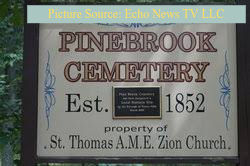
Nevertheless, Peter raised a family on "Squankum Road" in Pine Brook—a name meaning "where the evil spirit rests." On a side note, off Squankum Road still stands one of the oldest known Lenni Lenape & African Civil War Burial Grounds in New Jersey, where William Elijah Rock's family members, including his children, are buried. These church grounds consist of three designations: "Shadow Rest Cemetery " is the oldest, followed by Pine Brook Churchyard, the second-oldest burial ground, and Ruffin Private Family burial ground. All three reside on what is called "Sacred Lenni Lenape Ground," which was used as part of the Underground Railroad, where Peter Rock's Strawberry Business, which exported Strawberries to Europe, stood. Plus, where the direct descendants of Lenni Lenape warriors' children are to be buried per Rock Folklore. In this writer's opinion, the son born to Peter Rock, the first or second, became William Elijah Rock's father. These intertwined histories bestowed upon William Elijah Rock an inheritance of courage, tenacity, and vision.

William Elijah Rock's journey was guided by deep ancestral roots and an unwavering dedication to education. After attending public schools in Pine Brook and receiving private instruction under Professor John R. Porter in New York, he pursued legal studies for eight years under T.W. Throckmorton in Red Bank, New Jersey. On 14 February 1884, he married Annie O. Bowles of Red Bank, forging a partnership that would profoundly influence New Jersey's Black press and business communities.
In 1904, Mr. Rock (43 yrs old) and Mr. Howard established The Echo, New Jersey's oldest Black-owned newspaper. The publication began in Long Branch and later relocated to Red Bank, propelled by a modest $50 in starting capital. Through vision and determination, The Echo emerged as a vital source of information and inspiration for the Black community. By 1915, the Rock Building at 37 West Front Street in Red Bank—valued at more than $3,000—stood as a proud emblem of prosperity and independence. Within its walls, the original Echo printing press technicians published both "The Courier Newsletter" with Sumnersett Publishing and the Echo Saturday Evening Newspaper on the upper floor, while the lower level featured the Rock Building Fashion Boutique and its dedicated sales staff.

Mr. Rock's leadership ensured The Echo remained free of debt and steadfast in its mission: "In Concern of the Negro." Mr. William Elijah Rock's accomplishments extended far beyond journalism. He was a distinguished breeder and trader of fine thoroughbred horses, with one of his celebrated horses, Rockwell, earning particular renown. On the day of Rockwell's remarkable victory, many less fortunate individuals saw their circumstances transformed for the better. In tribute, Long Branch, NJ, named one of its main fairways "Rockwell Avenue" during that era—home to the Echo Tavern, and intersected by Lippincott Avenue, itself named for a devoted patron of Peter Rock & Sons Fine Thoroughbred Horse Breeder Stables, whose locations spanned Pine Brook (now Tinton Falls), Colts Neck, and reached toward the Naval Academy. Beyond his equestrian pursuits, William Rock owned and operated "William Rock's Ice Cream Parlor" in Red Bank, NJ, located at the Independent Order of Odd Fellows 39 Navesink Lodge. It was a cherished, community-owned Black establishment in Red Bank, N.J., enjoyed by all. He was a devoted churchgoer and generous supporter, who also treasured joining Lenni Lenape relatives at their "Pow Wow Meetings" held in Scotch Plains, NJ. About | The Echo Press
The publisher of The Echo was a proud Frederick Douglass Republican and Episcopalian. Mr. Rock was a respected member of the National Negro Press Association, National Negro Business League, and Knights of Pythias. Together with his wife, Annie Bowles-Rock, he raised a remarkable family. Their son Leroy a PFC HQ CO 807 Pioneer Infantry World War 1 Veteran became both an electrical contractor plus business owner but also a celebrated Carnegie Hall violinist, plus managed "The Echo" upon his father's passing in the mid to late 1940s until his passing in 1963, while his brother Arnold followed in their father's footsteps as Editor Publisher of The Red Bank Echo, and their sister Rose contributed to the family's enduring legacy. William Elijah Rock's entrepreneurial spirit was unmatched.

Mr. Rock either established or inherited the Rock Land Development Company, transforming pine-filled land into ready homestead sites complete with plumbing and electric access. At a time when Black families were fleeing the South, his vision provided them a place to call home, making a tangible difference for those carrying the burdens of displacement and the scars of slavery. Mr. Rock's talents reached well beyond publishing - he was an ardent supporter of his church and Lenni Lenape cultural events, embodying both community spirit and generosity. Today, as his great-granddaughter, I am honored to relaunch " The Echo" on The Echo News TV LLC Platform, while remaining steadfast to its original mission: "In Concern of the Negro." Since 1904, The Echo—also known as The Echo Press and Echo Saturday Evening Newspaper—has united Black communities, businesses, churches, and celebrations across New Jersey for over 50 years.
William Elijah Rock's courage and unwavering sense of dignity established a standard for Black leadership, even as he and his peers confronted relentless discrimination, dispossession of land, and fabricated narratives. His legacy is one of pride, resilience, and unshakable faith. Let us honor the many ventures and enterprises William Elijah Rock created, each rooted in service and advocacy for Black advancement. Today, we celebrate Mr. William Elijah Rock as an unsung hero of Black American history in Monmouth County and beyond.


Reference:
NJ’s Underground Railroad Heritage 9. The Underground Railroad | Salem County Cultural & Heritage Commission - For more on Echo News TV LLC’s mission and to become part of this living legacy, visit Echo News TV LLC online. Support our return to print—coming soon, a bi-monthly hardcopy edition reconnecting readers with trusted, independent Black journalism Home | The Echo Press News TV | NJ Black Owned Newspaper-Community News & Opinion Articles Home | The Echo Press News TV | NJ Black Owned Newspaper-Community News & Opinion Articles


Comments