


A Tribute for These Times

Updated: Sep 4
August 31, 2026
The acknowledgement of Bishop Reginald T. Jackson’s memorials was published this month because the closing months of 2025 were consumed by an unprecedented level of political turmoil. Throughout November and December, the nation was shaken by President Trump and his allies’ escalating attacks on American citizens, civic institutions, and long‑standing democratic norms. That climate demanded constant reporting, rapid response, and vigilant attention from community‑centered outlets like the relaunched Echo.
Only now—after the political dust has settled—has the space emerged to properly honor Bishop Jackson with the depth, dignity, and historical clarity he deserves. Dr. Joe Taylor’s reflection arrives at the right moment: a moment when our communities can finally breathe, look back, and recognize the vital legacy Bishop Jackson gave to Black citizens across New Jersey and beyond. His advocacy, courage, and moral leadership were not just pastoral; they were a shield for the vulnerable and a roadmap for justice.
We at the Echo are proud to uplift his name, proud to publish this overdue tribute, and proud to remind our readers that even in turbulent seasons, giants like Bishop Reginald T. Jackson continue to light the way.

By Dr. Joe Taylor:
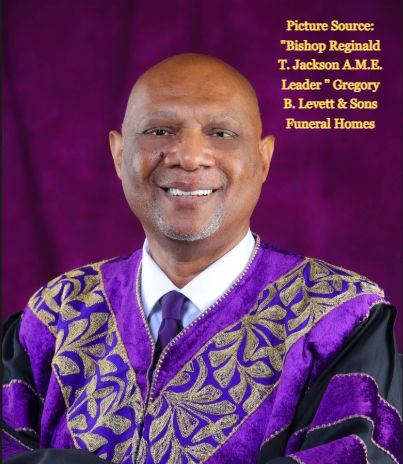
Memorial Reflection Commentary of the Honorable Rt. Rev. Bishop Reginald T. Jackson Sunrise: April 26, 1954, Sunset: November 25, 2025
Orange, New Jersey - Today, I feel compelled to honor a great man. Although this article is long overdue, I believe this is the right moment to reflect on an iconic man of God. Why now? Because we are living in uncertain times. The world is in turmoil, and this country has lost much of its standing—and, frankly, it's way. We have entered dark times and deep waters, and we need the kind of leadership Bishop Reginald T. Jackson represented. Allow me to present him to some and introduce him to others: the Honorable Bishop Reginald T. Jackson.
Meeting Bishop Jackson
I was blessed to meet this man of God while serving as Director of Religious Services for the Juvenile Justice Commission (JJC) of New Jersey. In that role, I had the honor of working with hundreds of churches, pastors, and organizations across the state. During that time, I met the Executive Director of the Black Ministers’ Council of New Jersey and pastor of St. Matthew A.M.E. Church in Orange, New Jersey. That pastor would later be elected and consecrated in 2012 as the 132nd bishop of the A.M.E. Church.

A Heart for the Underserved
Bishop Jackson was known for his warmth, compassion, and deep commitment to fighting for those who were too often overlooked—the underdog, the disenfranchised, and the underprivileged. I witnessed this commitment firsthand, as I will explain later in this article. The Black Ministers’ Council of New Jersey (BMC), founded in 1982, represented more than 600 African American churches and denominations across the state. Advocacy for Justice and Reform The BMC stood at the forefront of efforts to address racial profiling by the New Jersey State Police. Through its advocacy, the organization helped bring public attention to discriminatory traffic stops, the need for accountability, and calls for meaningful policing reform.
Bishop Jackson’s Leadership
Bishop Jackson helped lead that charge. He was instrumental in advancing major initiatives across New Jersey, including increased funding for Abbott school districts and efforts to end predatory lending practices targeting senior citizens and minority communities. He also addressed critical issues affecting people of color throughout the state. He led marches and rallies at the state capital, testified before U.S. congressional committees, and met with then-U. S. Attorney General Eric Holder to discuss policing concerns.
Support During a Difficult Season

As mentioned earlier, I met Bishop Jackson while serving as Director of Religion for the Juvenile Justice Commission (JJC) of New Jersey. At the time, I was a young minister facing significant scrutiny because of my role with the JJC and, previously, with the Department of Corrections. Bishop Jackson recognized that I needed support—and someone of stature in my corner. He understood the climate I was facing and the landscape I had to navigate.
Guidance, Protection, and Opportunity
Bishop Jackson took me under his wing and appointed me as one of the Vice Presidents of the organization. I later came to understand that, in many ways, he had also positioned me as his personal bodyguard. Almost immediately, I gained greater respect and credibility at work. Because the JJC was a state agency influenced by politics, Bishop Jackson understood how to navigate that environment. Black Ministers Council Of New Jersey Inc in Orange, NJ
He also understood that aligning me with the BMC—and, more importantly, keeping me close to him—would make my journey much smoother. He knew his stature could benefit both my work and my career, and he used his influence to support me. My directors recognized his reach, and his support helped open doors and bring me favor. In one conversation, I told him I understood why he had appointed me Vice President, and I thanked him sincerely. His support made my career—and my 30 years at the JJC—much smoother.
A Steadfast Partner in the BMC
Although Bishop Jackson had pastors and ministers on his Board of Directors who worked diligently to help the BMC operate effectively, one member stood out for her tireless commitment: Reverend Linda G. S. Ellerbe, the Board’s secretary and an esteemed member.
In my humble opinion, Reverend Ellerbe was among those who worked hardest to “keep us all straight.” She serves as pastor of Mt. Zion A.M.E. Church in Atglen, Pennsylvania, and helped provide some of the information included in this article. She has been a dear friend—someone I could call on whenever needed—and a great woman of God whose service was truly invaluable to the BMC.
A Leader Needed in Our Time
At this moment in our history, this country could use a leader like Bishop Reginald T. Jackson. He is deeply missed for his leadership, friendship, compassion, and brilliance. To know him was to love him—and to wish he would never have to leave.

About:
Bishop Reginald Thomas Jackson Sunrise: April 26, 1954, Sunset: November 25, 2025 Bishop Reginald Thomas Jackson stands as one of the most respected and steady voices in modern African Methodism — a leader shaped by the twin engines that have lifted generations of Black excellence: HBCUs and the A.M.E. Church. A proud product of this tradition, Bishop Jackson embodies the character‑building, disciplined scholarship, and moral clarity these institutions cultivate. His ministry reflects the A.M.E. Church’s historic charge to defend the vulnerable, educate the community, and speak truth to power. Whether advocating for voting rights, confronting racial inequities, or strengthening congregational life, he carries the intellectual rigor of a trained theologian and the pastoral tenderness of a shepherd who knows his people’s story from the inside.
His leadership extends beyond the pulpit into the civic arena, most notably through his instrumental work with The Black Ministers’ Council of New Jersey, where he helped mobilize clergy around issues affecting Black families, youth, and neighborhoods statewide. Under his guidance, the Council became a force for policy accountability, community uplift, and moral advocacy. Bishop Jackson’s voice is beloved because it is consistent — scholarly yet accessible, firm yet compassionate, deeply rooted in faith yet unafraid to confront injustice. In every arena, he reflects the best of the A.M.E. tradition: a leader formed by history, committed to service, and devoted to the advancement of his people.
Rest in peace, dear friend; rest in peace.
Please enjoy Walter Hawkins' Love Alive III: "I Won't Be Satisfied"


Comments